
If you’ve ever wondered why the pour over coffee at your favorite specialty café tastes nothing like what comes out of your drip machine at home, you’re not alone. I asked myself the same question about eight years ago, and that curiosity sent me down a rabbit hole that’s seen me brew, break, and replace more drippers than I’d care to admit.
This guide is the article I wish I’d had back then. I’ve spent the last several years pulling shots, dialing in grinders, and brewing pour over coffee almost every single morning. I’ve tested cheap plastic drippers from forgotten brands, splurged on hand-thrown ceramics, and burned myself on more than one gooseneck kettle. What you’re reading is a distilled version of that experience, focused on helping you pick the right pour over coffee maker for your kitchen, your skill level, and your budget.
Affiliate Disclosure: As an Amazon Associate, I earn from qualifying purchases. If you buy something through the links in this guide, I may receive a small commission at no extra cost to you. I only recommend products I’ve personally used or thoroughly researched, and my opinions are my own.
Let’s get into it.
Why Pour Over Coffee Is Worth the Extra 4 Minutes
Pour over coffee, sometimes called manual pour over coffee or filter coffee, is exactly what it sounds like. You place ground coffee in a coffee dripper, slowly pour hot water over it in a controlled pattern, and gravity does the rest. No pods, no pressurized chambers, no mystery.
What you get in exchange for those four extra minutes is clarity. Pour over brewing strips away the muddiness you sometimes get from a French press or auto-drip machine and lets the actual flavors of the bean come through. Floral Ethiopians taste floral. Chocolatey Colombians taste like chocolate. A great cup of pour over coffee can genuinely change how you think about what coffee is supposed to taste like.
The other thing I love? Control. You’re the barista. The grind size, water temperature, pour rate, and bloom time are all in your hands, which means once you find your rhythm, you can pull café-quality coffee out of beans you bought at the grocery store.
How to Choose the Best Pour Over Coffee Maker: A Buying Guide
Before we get into individual product reviews, here’s what actually matters when picking a pour over coffee dripper. Skip the marketing jargon, these are the specs I look at every time.
1. Material
• Ceramic retains heat beautifully and looks gorgeous on a counter, but it’s heavy, breakable, and needs preheating. My pick for daily home use.
• Glass (think Chemex) gives you a stunning visual brew and is generally more forgiving than ceramic. Fragile, though.
• Plastic (BPA-free) is lightweight, nearly indestructible, and ironically what many world-class baristas use because it holds temperature consistently. Best for travel.
• Stainless steel is the most durable but tends to dissipate heat quickly. Great for camping.
2. Filter Shape & Brew Geometry
This matters more than people realize. A Hario V60-style cone uses a single large hole and spiral ribs to create a fast, vibrant cup. A Kalita Wave uses a flat bottom with three small holes for a more forgiving, balanced extraction. The Chemex pour over uses thick bonded filters that produce an exceptionally clean, tea-like cup.
There’s no “best” geometry, just the one that suits your taste.
3. Capacity
Think about how much coffee you actually drink at once:
• 1–2 cup drippers are perfect for solo brewers
• 3–6 cup carafes make sense for couples or weekend hosting
• 8+ cup brewers like the larger Chemex models are ideal for entertaining
4. Filter Availability
Some drippers use proprietary filters (Kalita Wave, Chemex) that you’ll need to keep stocked. Others, like the V60, are so popular that filters are everywhere, including most grocery stores at this point.
5. Ease of Use
Are you a beginner, or are you chasing extraction percentages? Some drippers are extremely forgiving (Kalita Wave). Others reward technique but punish sloppy pouring (V60). I’ll flag this for each product below.
6. Accessories You’ll Actually Need
A great dripper is only part of the pour over coffee set. You’ll also want:
• A gooseneck kettle for precise pouring (non-negotiable, honestly)
• A burr grinder for consistent grind size
• A digital scale for measuring coffee and water by weight
• A timer (your phone works)
I’ll point to recommended kettles throughout this guide.
My Top 7 Pour Over Coffee Maker Reviews for 2026
I’ve narrowed the field down to seven drippers I genuinely recommend, covering every price point from “treat yourself” to “best budget pour over coffee maker.” Here’s how each one performed in my kitchen.
1. Hario V60 Ceramic Dripper, Best Overall
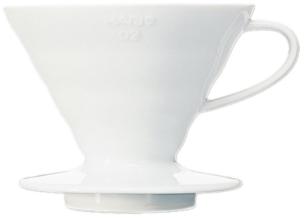
What sets the V60 apart is its 60-degree cone angle, spiral ribs, and large single hole at the bottom. Together, these create a fast, uninhibited flow that highlights the bright, complex notes in lighter roasts. When I want to taste exactly what a coffee is doing, every floral note, every hint of fruit, this is what I reach for.
Pros:
• Exceptional clarity and flavor separation
• Ceramic retains heat well once preheated
• Filters are cheap and available literally everywhere
• Beautiful, minimalist design
Cons:
• Less forgiving, pour technique really matters
• Needs preheating (rinse with hot water before brewing)
• Ceramic can chip if dropped
Best for: Intermediate brewers ready to focus on technique, and anyone who loves bright, aromatic coffees.
2. Kalita Wave 185, Best for Beginners
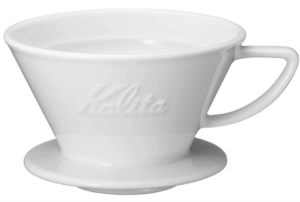
I recommend this to nearly everyone asking about the best pour over coffee maker for beginners. You’ll still get a clean, vibrant cup, but you don’t have to be precise to the gram and second to make something delicious.
Pros:
• Extremely forgiving brew geometry
• Consistent extraction every time
• Stainless steel version is essentially indestructible
• Excellent balance and body
Cons:
• Proprietary wave filters can be harder to find
• Filters are pricier than V60 papers
• Slightly less flavor “wow factor” than a V60
Best for: New pour over brewers, anyone tired of inconsistent results, and people who want great coffee without a learning curve.
3. Chemex Classic 6-Cup, Best for Entertaining
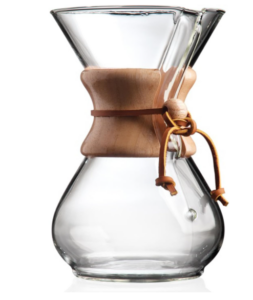
I pull mine out on weekends when I’m brewing for two or three people. Watching coffee bloom inside that hourglass shape never gets old.
Pros:
• Stunning, conversation-starting design
• Exceptionally clean, smooth cup
• Brews and serves from the same vessel
• Heat-resistant borosilicate glass
Cons:
• Filters are expensive and bulky
• Glass is fragile (the wood collar helps)
• Cleaning the bottom of the carafe requires a bottle brush
Best for: Hosting, gifting, and anyone who appreciates beautiful objects that work hard.
4. Hario V60 Pour Over Coffee Set with Glass Server, Best Complete Set
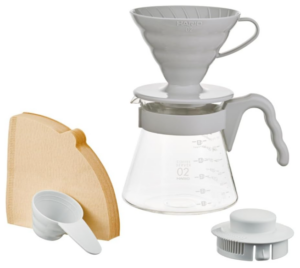
I bought this set as a gift for my sister-in-law last year, and she went from “I don’t really like coffee” to brewing pour over every morning within a month. The server’s drip-resistant spout makes pouring into mugs effortless.
Pros:
• Complete starter kit, no piecing things together
• Beautiful matching aesthetic
• Server doubles as a measuring vessel
• Excellent value for a full set
Cons:
• Glass server requires careful handling
• Plastic V60 in this set isn’t as photogenic as ceramic
Best for: Gifts, beginners, anyone who wants one-and-done shopping.
5. Bodum Pour Over Coffee Maker with Permanent Filter, Best Budget Pick
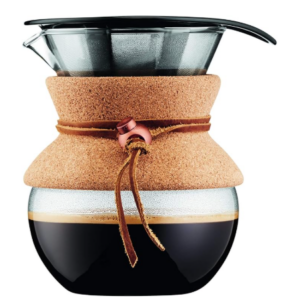
The catch? Metal filters let more oils and tiny coffee particles through, so the cup has more body but less clarity than a paper-filtered brew. Some people prefer this. I like it as a weekday workhorse when I don’t want to think too hard.
Pros:
• Genuinely affordable
• No paper filter expense, ever
• Eco-friendly
• Rich, full-bodied cup
Cons:
• More sediment than paper-filtered methods
• Mesh filter needs thorough cleaning
• Cup lacks the “sparkle” you get from a V60 or Chemex
Best for: Budget-conscious buyers, sustainability-minded brewers, and people who like a heavier cup.
6. Origami Dripper, Premium Choice for Coffee Enthusiasts
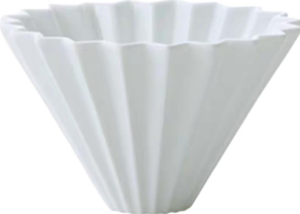
It’s pricey. It’s also the most beautiful object in my kitchen. The brews I get from it consistently outperform every other dripper I own when I’m dialed in.
Pros:
• Award-winning brew performance
• Compatible with both V60 and Wave filters
• Stunning craftsmanship
• Available in beautiful colors
Cons:
• Premium price tag
• Ceramic is delicate
• Requires good technique to fully appreciate
Best for: Enthusiasts, gift-givers with a serious budget, and anyone who wants the best ceramic pour over coffee maker on the market.
7. OXO Brew Pour-Over Coffee Maker with Water Tank, Best Semi-Automatic
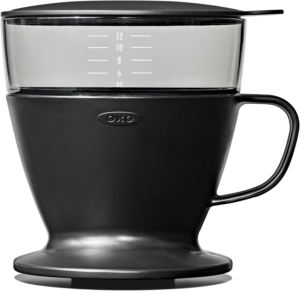
Is it the same as a hand-poured V60? No. Is it dramatically better than most drip machines? Absolutely. And for busy mornings, it’s a godsend.
Pros:
• Hands-free brewing
• Even, consistent water distribution
• No gooseneck kettle required
• Real pour over flavor
Cons:
• Less control over variables
• Bulkier than a simple dripper
• Pricier than manual options
Best for: Time-pressed mornings, households where everyone wants coffee at once, and people who want pour over flavor without the ritual.
Side-by-Side Comparison Table
| Pour Over Coffee Maker | Material | Capacity | Difficulty | Best For | Price |
| Hario V60 Ceramic | Ceramic | 1–4 cups | Intermediate | Clarity & aroma | Click Here |
| Kalita Wave 185 | Stainless steel | 2–4 cups | Beginner | Forgiving brews | Click Here |
| Chemex 6-Cup | Glass | 4–6 cups | Intermediate | Clean cups & hosting | Click Here |
| Hario V60 Starter Set | Glass + plastic | 1–4 cups | Beginner | Complete starter kit | Click Here |
| Bodum Pour Over | Glass + steel mesh | 4–8 cups | Beginner | Budget brewers | Click Here |
| Origami Dripper | Ceramic | 1–4 cups | Intermediate+ | Premium experience | Click Here |
| OXO Pour-Over | Plastic + steel | 4–8 cups | Easy | Hands-free brewing | Click Here |
Our Top Picks at a Glance
Our Top Pick: Hario V60 Ceramic
After years of testing, the Hario V60 is still the dripper I recommend most often. It’s affordable, the filters are everywhere, and once you nail the technique, no other dripper produces a more expressive cup. It’s the gold standard of the coffee pour over method for a reason.Best Value: Bodum Pour Over
For under $30, you get a complete brewing system with no recurring filter costs. The Bodum punches well above its price tag and is the best budget pour over coffee maker I’ve tested.Premium Choice: Origami Dripper
If money’s not a primary concern and you want something genuinely special, the Origami delivers competition-grade brews in a dripper that doubles as kitchen art.Don’t Forget the Gooseneck Kettle
I cannot overstate how much a gooseneck kettle changes your pour over game. The narrow spout gives you precise control over water flow, which is the single biggest variable in extraction. A variable-temperature electric model is worth the upgrade if you brew daily.
Internal link suggestion: See our guide to the best gooseneck kettles for pour over coffee.
Hario V60 vs Kalita Wave: Which Should You Buy?
This is the single most-asked question I get, so let me put it plainly.
Choose the Hario V60 if you:
• Want maximum flavor clarity and aroma
• Don’t mind practicing your pouring technique
• Drink lighter, brighter roasts
• Like the idea of cheap, ubiquitous filters
Choose the Kalita Wave if you:
• Want consistent results from day one
• Brew different roasts (it handles dark roasts beautifully)
• Don’t want to obsess over pour technique
• Have a Kalita filter supplier nearby (or buy online in bulk)
Honestly? Many enthusiasts own both. They’re complementary rather than competing.
How to Make Pour Over Coffee: A Quick Method
Since you’ll likely be wondering how to use a pour over coffee maker the moment yours arrives, here’s the simplified version of my daily brew:
1. Heat water to 200°F (93°C). Use filtered water if your tap tastes like a pool.
2. Grind 20g of coffee to medium-fine. Think coarse sand.
3. Place the filter in the dripper and rinse with hot water. This removes paper taste and preheats everything. Discard the rinse water.
4. Add coffee grounds and place the dripper on your server or mug.
5. Bloom: Pour 50g of water over the grounds, just enough to saturate. Wait 30–45 seconds. You’ll see the coffee puff up, that’s CO2 escaping.
6. Main pour: Slowly pour the remaining water (target 320g total) in concentric circles, keeping the water level steady. Aim for a total brew time of 3 to 4 minutes.
7. Remove the dripper, swirl, and serve.
That’s the foundation. Tweak grind size to dial in flavor, finer if it tastes weak or sour, coarser if it tastes bitter.
Internal link suggestion: For a full tutorial, see our deep dive on how to make pour over coffee at home.
Affiliate Disclosure: Reminder, this guide contains Amazon affiliate links. If you purchase through them, I earn a small commission at no extra cost to you. I only recommend products I’ve used personally or have strong, evidence-based reasons to trust.
Frequently Asked Questions
Is a pour over coffee maker worth it?
If you genuinely care about flavor and don’t mind a 4-minute brewing ritual, yes, overwhelmingly so. A $30 dripper plus a decent grinder will outperform $300 drip machines. If you want push-a-button convenience, look elsewhere.
What’s the difference between a pour over and a drip coffee maker?
A drip coffee maker automates water delivery (often poorly, with uneven saturation and inconsistent temperature). A manual pour over coffee maker puts you in control of every variable, water temp, pour speed, bloom time, which is exactly why the results are better.
Do I really need a gooseneck kettle for pour over coffee?
Strictly speaking, no. Practically speaking, yes. Standard kettles dump water too quickly and unevenly, which ruins extraction. A gooseneck kettle is the single biggest upgrade you can make after getting a dripper.
How long does pour over coffee take to brew?
A typical single-serve brew takes 3 to 4 minutes from start to finish. Factor in another minute or two for boiling water and grinding. So roughly 5 to 6 minutes total, about the time it takes to scroll Instagram.
What grind size should I use for pour over?
Medium to medium-fine, similar to coarse sand or table salt. If your coffee tastes weak or sour, grind finer. If it tastes bitter or harsh, grind coarser. A burr grinder makes a huge difference here.
Can I use regular paper filters in a Hario V60?
Only V60-specific filters, they’re shaped for the cone and have the right thickness. Basket-style coffee filters won’t fit properly and will mess up extraction. Same goes for Kalita Wave and Chemex, which both use proprietary filters.
What’s the best pour over coffee maker for one cup?
The Hario V60 Size 01 or the Kalita Wave 155 are both excellent single-cup options. If you want to brew directly into a travel mug, the V60 sits beautifully on top of most cups.
How do I clean my pour over coffee maker?
For most drippers, rinse with hot water after each brew and wash with mild soap weekly. Avoid abrasive scrubbers on ceramic. Chemex carafes need a bottle brush to reach the bottom. Stainless steel mesh filters (like the Bodum’s) need a thorough brush every few days to prevent oil buildup.
Final Recommendation
If I had to send one friend off with a single recommendation, I’d point them to the Hario V60 Ceramic paired with a basic gooseneck kettle. It’s the highest-leverage purchase in the entire pour over coffee world, affordable, beautiful, and capable of brewing world-class coffee for years. After eight years of daily use, my own V60 still looks like the day I bought it.
And if you want hands-free convenience without sacrificing real pour over flavor, the OXO is the smartest semi-automatic option on the market.
Whichever pour over coffee dripper you choose, here’s the truth nobody tells you when you’re shopping: the dripper matters less than the beans, the grinder, and your willingness to practice. Buy fresh coffee from a local roaster, grind it right before brewing, and give yourself a couple of weeks to dial in your technique. You’ll be amazed what comes out of your kitchen.
Happy brewing.



Leave a Reply